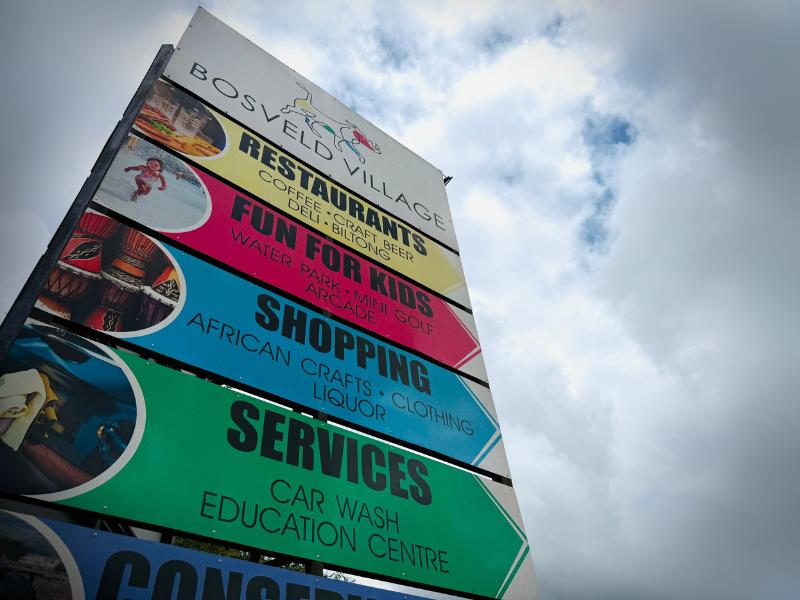
Bosveld Centre: Community Connection and a Touch of the Wild

Bosveld Centre: Community Connection and a Touch of the Wild

Tucked between Hoedspruit’s citrus orchards and the wild edges of the greater Kruger lies the charming Bosveld Centre — a place that blends heritage with fresh purpose.

Once home to the beloved Bosveld Slaghuis (Butchery in Afrikaans), this nostalgic space has purposefully evolved into a meaningful gathering point for both locals and visitors alike.

I recently had the opportunity to sit down with Patrick Jordan, the driving force behind the Centre’s transformation. Over a coffee and the soft buzz of a weekday morning, we spoke about Bosveld’s evolving role and future aspirations within the Hoedspruit landscape.

Our conversation touched on thoughtful development, community collaboration, and the exciting vision for events that celebrate both the local culture and the surrounding bushveld lifestyle. 

FROM SLAGHUIS TO SYMBOL 

To understand Bosveld Centre’s present and future, we must first honour its past. For decades, Bosveld Slaghuis stood as a cornerstone of Hoedspruit — not just a butcher, but a social gathering spot deeply embedded in local life.

With Hoedspruit’s continued growth and the evolving tourism economy, it became clear that the space could take on a new purpose.

Now, under the guidance of Patrick, the hubs General Manager, the Bosveld Centre is evolving with intention.

“We didn’t want to erase what was,” Patrick explains. “We wanted to build on it — to honour the land, the people, and the spirit of this place.”


A HUB OF FAMILY, NATURE AND NOSTALGIA

The Bosveld Centre is now a vibrant, family-oriented destination offering something for everyone. Parents can enjoy a coffee while kids explore the playground, try mini-golf, or dive into paintball.

It’s a space where visitors can wander through boutique shops, taste homemade treats at the deli, or cool down with artisanal gelato.

What truly sets Bosveld apart though is its respect for nature. “We’re building around the trees, not over them,” Patrick points out.

His words capture the very soul of Bosveld Centre’s vision — a place where development doesn’t come at the cost of nature, but moves with it.

Unlike many modern projects where trees are often seen as obstacles, Bosveld Centre embraces them as part of its identity.

As far as possible, existing trees have been protected, woven thoughtfully into the layout rather than removed.

Gravel paths curve naturally between them, shaded seating invites visitors to linger under their canopies, and indigenous gardens mirror the untouched beauty of the surrounding bushveld.

This is not a space imposed on the landscape — it’s one that honours it, blending into the environment with humility and care.


MEET THE BUSINESSES BEHIND THE VILLAGE: 

Bosveld Village is a true reflection of Hoedspruit’s spirit — a balance between everyday essentials and vibrant experiences.

With offerings spanning from fine deli goods, family cafés, and creative boutiques to health, education, outdoor adventures, and conservation, the Village is designed to serve the whole community.

It’s not just a shopping stop — it’s a destination for locals and visitors alike to enjoy, explore, and connect.

Food & Beverage

Kampvuur Meat & Deli
📞 072 627 5503 | ✉️ Kampvuurquality@gmail.com

The Gelato Spot
📞 076 792 0946 | ✉️ yolandavanwyk@gmail.com

Anne’s Cotton Club Café
📞 079 286 5600

Hoedspruit Brewing Company
📞 079 527 7466 / 060 970 7771

Tasty Bites
📞 074 075 3139

Retail & Lifestyle

Dinah’s Toys and Gifts
📞 079 697 3101 | ✉️ dinahhendrik@gmail.com

Yellow Bird Collection
📞 083 306 5637 / 083 378 4405

Bosveld Village Arts and Crafts
📞 +27 83 969 4111 | ✉️ williamkirubi@yahoo.com

Woodlands Garden Centre
📞 060 529 4496 | ✉️ Woodlandsofficemanager@gmail.com

Caleb Leadwood Exquisite Art
📞 074 458 2829

Health & Wellness

Wildscapes Veterinary & Conservation Services
📞 071 396 2942 / 072 094 0336 | ✉️ Leah@wildscapesvet.com

Hoedspruit Chiropractic
📞 063 505 7385

Occupational Therapy – Kirsten Jordaan
📞 084 208 4646

Souljah Ink Tattoo & Piercing
📞 076 890 9004 | ✉️ Souljahink333@gmail.com

Rootz Hair Co
📞 079 987 1186

Education & Kids

Cambrilearn Preparatory 
📞 082 888 8700

Kidz@Bosveld Playground
📞 078 448 4142 | ✉️ manganyiannikie737@gmail.com

Adventure & Outdoor Activities

Hoedspruit Adventure Centre
📞 063 539 0505 | ✉️ Info@hoedspruitadventurecentre.com

Bosveld Adventure Centre
📞 082 806 9937 | ✉️ wouter@pmehoed.co.za

HSA Action Sports
📞 064 030 6170 / 083 303 2548 | ✉️ Action@hoedspruitsports.co.za

Professional Services

CPK Tucker Attorneys
📞 082 909 3448 | ✉️ Chris@cpktuckerattorneys.com

Industrial Liquor Distributors
📞 083 463 2253 | ✉️ hoedspruit@i-liquor.co.za

Someshap Production
📞 082 558 6462 | ✉️ Alex@someshap.com

Conservation & Non-Profit

Timbavati Foundation
📞 060 508 5961 / 051 004 0543 | ✉️ foundation@timbavati.co.za

Timbavati Private Nature Reserve
📞 015 793 2394 | ✉️ reception@timbavati.co.za

Services

Bosveld Village Car Wash
📞 083 969 4111 (WhatsApp)

INTENTIONAL GROWTH  AND SIGNATURE EVENTS :  

Patrick shared a bigger vision with me: Bosveld as a venue for cultural connection and celebration. “If we want Hoedspruit to be a year-round destination, we need anchor events that bring people together,” he explains.

The Centre is preparing to host four major annual events:

– A festive Christmas celebration with all the magic of a Lowveld holiday.
– A family-focused Easter weekend packed with activities, treats, and community spirit.
– The Hoedspruit Beer Festival, shining a spotlight on regional brews and good vibes.
– A proudly South African Braai Day, bringing people together with food, fire, and music.

These events are more than merely marketing tools. They’re designed to create moments and memories for locals and visitors alike.

ROOTED IN HERITAGE, GROWING WITH VISION:

Development in Hoedspruit comes with a responsibility: to grow without losing the town’s soul. As tourism and property investment rise, Bosveld Centre is committed to authenticity.

“We’re not rushing to fill every space,” Patrick says. “We want to evolve with the town — to offer what people need, not just what’s profitable.”

Future plans include a dedicated walking trail through the greenbelt behind the centre — an open, accessible space that encourages calm and connection to the environment.

THE ART OF COMMUNITY COLLABORATION:

Patrick sees untapped potential in local artists and artisans. “Hoedspruit is full of talent, and we haven’t tapped into that enough,” he admits.

The Centre plans to grow its partnerships by introducing seasonal markets, creative exhibitions, and workshops — creating platforms to showcase local culture.

He also stressed the importance of celebrating the citrus industry — a foundational part of Hoedspruit’s economy.

“Tourism is big — but agriculture built this place”. A long-term goal includes curating an exhibit that honours both the citrus legacy and the safari connection.

Q&A HIGHLIGHTS:

During my conversation with Patrick, we uncovered some of the heart and thinking behind Bosveld Centre’s unique approach. Here are a few standout moments and insights that capture the spirit of the project — 

What sets Bosveld Centre apart?
“The history matters. Bosveld has always been part of the fabric of this community, and we’re just building on that foundation. There’s a sense of familiarity and heart here that you don’t always find in new developments.”

What’s your vision for the future?
“To grow steadily with the town, while always staying family-friendly and grounded in nature.”

How do you want to see the community evolve around Bosveld?
“With openness and collaboration. We want ideas. We want feedback. The Centre should feel like it belongs to everyone.”

A REFLECTION OF HOEDSPRUIT ITSELF:

The Bosveld Centre is more than just a commercial space — It’s Hoedspruit, written in stone and shaded by trees. It blends bushveld beauty with entrepreneurial spirit.

It honours tradition while welcoming change. It’s where families come to relax, where friendships are formed, and where community continues to thrive.

Thanks to Patrick Jordan’s steady leadership, the Centre is carving out a role that feels both grounded and dynamic — a space that grows with the town, but never loses touch with its roots.

Whether you’re a tourist passing through, a local with deep roots, or a newcomer falling in love with this corner of the world — the Bosveld Centre is a place worth visiting, and even more worth belonging to.

Easter Escapes: Discover Hoedspruit’s Wild Side

Easter Escapes: Discover Hoedspruit’s Wild Side

When most people think of Easter, they imagine chocolate bunnies and pastel-coloured egg hunts—but here in Hoedspruit, things take on a wilder, more meaningful rhythm. Tucked between bushveld landscapes and the call of the wild, Easter becomes something more than just a holiday. It becomes a journey.

Our charming little town offers an immersive experience where families reconnect, children explore with wonder, and nature sets the pace. It’s a time for adventure, togetherness, and quiet reflection, wrapped in birdsong and the whispers of rustling grass.

We think it’s safe to say Hoedspruit doesn’t just host Easter—it transforms it. Whether you’re visiting from afar or lucky enough to call this place home, the region welcomes you with open arms so expect festive fun, enriching moments, and memories that will stay with you long after the weekend fades.

 WHATS ON THIS EASTER 

As the bushveld begins to shift into its autumn hues, Hoedspruit transforms into a magical space for families and adventurers alike who crave a soulful escape. Whether you’re in town for the long weekend or planning a full week of rest and exploration, Easter in Hoedspruit is the perfect blend of local charm and experiences.

Here’s a look at the most anticipated Easter events happening in and around Hoedspruit:

BOSVELD EASTER FESTIVAL: MAGIC AND MOVIES UNDER THE STARS 

Location: Bosveld Village, R40
Date: Saturday, 19 April 2025
Time: 15:00 – 21:00
Tickets: R150 (Adults) | R40 (Children aged 6–12) | Free entry for children under 5
Bookings: Reserve your spot on Quicket

Event Highlights:

  • Live Magic Show by renowned mentalist Wolflock – a captivating performance for the whole family.

  • Outdoor Movie Screening of Hop – enjoy a relaxed evening under the stars. Don’t forget to bring your picnic blankets or camping chairs.

  • Local Food & Refreshments – indulge in freshly popped popcorn, Easter treats, boerie rolls, and more from a variety of local vendors.

It’s sure to be an unforgettable evening of wonder and entertainment!

KAMOGELO TOURISM CENTRE: ANNUAL EASTER EGG HUNT

Location: Kamogelo Tourism Centre
Date: Saturday, 19 April 2025
Time: 10:00 AM
Facebook: Kamogelo Tourism Centre

Celebrate Easter with a touch of local charm at the Kamogelo Centre’s annual Easter Egg Hunt. Enjoy a festive morning filled with Hoedspruit charm, laughter, and family-friendly activities in the heart of Hoedspruit. A beloved tradition for both locals and visitors, this event offers the perfect opportunity to connect with the community and make joyful holiday memories.

TSHUKUDU GAME LODGE: EASTER NIGHT SAFARI

Image Source https://www.instagram.com/tshukudugamelodge/

Location: Tshukudu Game Lodge
Date: Throughout the Easter Weekend 2025
Facebook: Tshukudu Game Lodge

Celebrate Easter under the starlit skies of the Lowveld with an unforgettable night safari experience. This special event includes a thrilling nocturnal game drive and a one-of-a-kind Easter egg hunt in the wild. Ideal for families with older children or couples looking to create a truly memorable Easter weekend.

SAFARI AND NATURE ESCAPES

It’s not hard to escape the ordinary in Hoedspruit, especially over Easter. Whether you’re looking to decompress or the thrill of adventure, the long weekend offers the perfect chance to reconnect on various levels. Here’s a snipet of what you can induldge in over the holidays:

Kruger National Park: experience the Big Five in one of Africa’s most iconic reserves.
Moholoholo Wildlife Rehab Centre: meet rescued wildlife and learn about conservation efforts.
Hoedspruit Endangered Species Centre (HESC): interact with cheetahs and endangered wildlife
Blyde River Canyon Boat Cruises: enjoy the canyon’s beauty with water-based wildlife viewing.
Hot Air Ballooning: Rise with the sun for panoramic views of the bush.
Panorama Route: take a scenic detour this Easter where waterfalls, canyon views, and charming towns await. Just a short trip from Hoedspruit, it’s the perfect blend of adventure and awe.

CULTURAL IMMERSION & LEARNING EXPERIENCES:

Beyond the wild, Hoedspruit offers rich cultural day excursions perfect for families. Visit local communities, take part in traditional craft workshops, and gain a heartfelt appreciation for South Africa’s vibrant heritage.

For families seeking a deeper connection this Easter Holiday, Hoedspruit offers enriching cultural experiences perfect for all ages. Spend a day at Nourish Eco Village, where community, education, and sustainability come together. Join a guided tour with Shik Shak Tours to explore the heart of local life, or experience the energy and tradition of Nyani Cultural Village – Roots of Rhythm, where music, dance, and storytelling bring culture to life in the most unforgettable way.


AN EASTER FEAST FOR THE SENSES: 

Most restaurants in Hoedspruit cater beautifully to families, with children’s menus and laid-back settings that make dining out a pleasure for all ages. For a curated list of top local eateries, be sure to peruse our Visit Hoedspruit Restaurant Directory, your go-to guide for family-friendly food spots this Easter.

One venue that truly shines over the Easter weekend is the Wag ‘n Bietjie Padstal, home to the delightful Black Chilli Eatery. Tucked away outside town along the R40, this charming destination is more than just a place to eat—it’s an experience. With breathtaking mountain views, a whimsical garden, a lively farmyard full of friendly animals, and outdoor play areas where kids can roam free, it’s the perfect spot for families to unwind while enjoying hearty meals and wholesome hospitality.

The Black Chilli serves up hearty breakfasts, fresh wood-fired pizzas, delicious lunches, and baked goods—all made with the utmost care and creativity. The atmosphere is warm and welcoming, making it an ideal choice for families looking to slow down and savour quality time together this Easter.

So there you have it…

Easter in Hoedspruit is more than a holiday; it’s an adventure that promises to enrich, educate, and entertain. It’s an invitation to create new traditions in one of the most beautiful and vibrant settings in South Africa.

Nourish Eco Village: Community meets Conservation

Nourish Eco Village: Community meets Conservation

Established in the heart of South Africa’s Lowveld, Nourish Eco Village offers an inspiring and transformative experience for travellers seeking to make a meaningful connection with the local community while immersing themselves in the natural beauty of the region.

Located just a short drive from Hoedspruit, en route to the iconic Kruger National Parks, Orpen Gate, this innovative non-profit organization is much more than a place to visit—it is a hub of sustainability, education, and cultural preservation. 

For those visiting Hoedspruit (and locals too), Nourish Eco Village provides a unique opportunity to witness the impact of grassroots community development projects while enjoying an authentic and enriching cultural experience.

Here’s why this remarkable destination deserves a spot on every traveller’s itinerary.


A VISIONARY APPROACH  TO SUSTAINABILITY AND CONSERVATION:

Nourish Eco Village was founded in 2011 by Sarah Dawn Bergs, whose vision was to address the socio-economic challenges faced by communities living along the borders of protected wildlife areas. These communities often grapple with issues such as poverty, food insecurity, unemployment, and limited access to education—all of which can inadvertently fuel wildlife crime, such as poaching. 

Recognising the intricate link between thriving communities and conservation, Nourish Eco Village set out to tackle these challenges holistically. Its mission, “Connecting Communities to Conservation,” reflects a deep commitment to creating self-sustaining communities that live in harmony with their natural surroundings. By addressing the root causes of poverty and wildlife crime, Nourish is working toward a future where people and wildlife can coexist.


EDUCATION: THE FOUNDATION OF CHANGE 

Education lies at the core of Nourish Eco Village’s work. The organization believes that knowledge and skills, empower individuals to build better futures for themselves and their communities ultimately fostering a sense of self worth and independence.

Let’s take a look at some of their initiatives – 


EARLY CHILDHOOD DEVELOPMENT: 

Nourish’s RISE Educare program focuses on early childhood development (ECD), providing crucial support to children aged 0–5. The program currently serves around 60 children at its own facility while supporting an additional six community creches through infrastructure development, teacher training, and the establishment of vegetable gardens to ensure food security. By investing in the youngest members of the community, Nourish is laying the groundwork for long-term growth and success.


GREEN KIDZ CLUB:

For older children, the Green Kidz Club provides a safe and stimulating after-school environment where learners engage in English literacy classes, environmental education, and creative activities such as music and art. By fostering a love for nature and teaching environmental stewardship, the program cultivates a new generation of conservation advocates who understand the value of protecting South Africa’s rich biodiversity.


ENTERPRISE DEVELOPMENT: BUILDING SUSTAINABLE FUTURES

Economic empowerment is a key pillar of Nourish Eco Village’s approach to sustainable development. The SEDIWA Hub (Skills, Education, and Development for Independent Work and Advancement) provides training in permaculture farming, green building, computer literacy, and financial management. By equipping individuals with practical skills, Nourish is enabling them to build sustainable livelihoods and contribute to the local economy.


CRAFT AND CREATIVITY:

Nourish also supports local artisans and crafters by providing a platform for them to showcase and sell their products. From handcrafted jewellery and textiles to upcycled art, the on-site craft shop highlights the creativity and resilience of the local community. Visitors can take home unique souvenirs while directly supporting the artisans who create them. 


SUSTAINABLE AGRICULTURE: 

The Eco Village features a working farm that supplies fresh produce for Nourish’s feeding programs while serving as an agribusiness model for the community. The farm demonstrates the potential of sustainable agriculture to address food insecurity and generate income, creating a ripple effect of positive change.


CULTURAL IMMERSION: A TRUE TASTE OF SHANGAAN LIFE

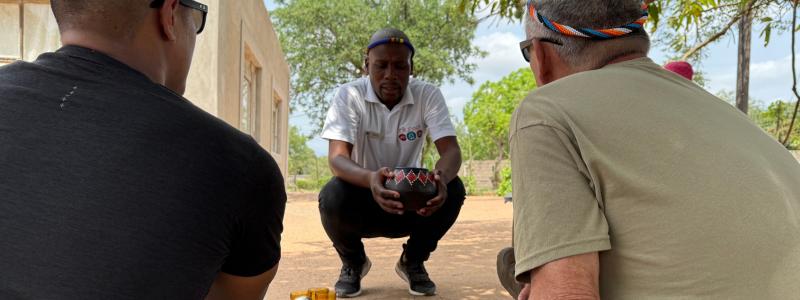
One of the highlights of visiting Nourish Eco Village is the opportunity to experience Shangaan culture firsthand. Guided village tours provide an authentic glimpse into the daily lives of local residents, including traditional crafts such as mat-weaving and pottery. Visitors can also meet a traditional healer, who shares insights into ancient practices and beliefs that have been passed down through generations.

For food enthusiasts, the experience extends to the culinary traditions of the region. Guests can savour local delicacies such as homemade peanut butter, mielie pap (a maize-based porridge), and wild spinach. The village also brews its own artisanal beer, offering visitors a chance to taste a true slice of rural South Africa.


ECO-FRIENDLY ACCOMMODATION 

Travellers looking to extend their stay can book accommodation at Shik Shack Backpackers, located within the Eco Village. Designed with sustainability in mind, the backpackers’ lodge features unique and eco-friendly accommodations, including preset tents, teepees, and rustic huts. Communal facilities such as a swimming pool, bar, and fire pit provide a relaxed and welcoming atmosphere.

The décor, made from upcycled materials, adds a whimsical charm to the space. For instance, bottle-top floors and recycled art pieces showcase the creativity and resourcefulness of the community. Shik Shack is also home to a few resident donkeys, whose playful antics delight visitors.


PARTNERSHIPS AND GLOBAL IMPACT 

Nourish Eco Village’s initiatives have attracted attention and support from a wide range of partners, including local businesses, international NGOs, and global corporations.

Partnerships with organizations like Sasol have helped amplify the reach and impact of Nourish’s programs. For example, Sasol’s Rewards Mzansi Tour brought visitors to the Eco Village to learn about its work and contribute resources to the RISE Educare program. 

By collaborating with like-minded organizations, Nourish is demonstrating the power of collective action to address complex challenges and create lasting change.


WHY VISIT NOURISH ECO VILLAGE?

A visit to the Eco Village offers travellers a rare opportunity to step outside the traditional tourist experience and make a meaningful contribution to the local community.

So if you’re craving a truly authentic adventure, here in Hoedspruit’s surrounds, look no further than this fun, uplifting day out with the Nourish team – where you’re certain to:   

Connect with our vibrant communities – meeting the inspiring individuals behind Nourish’s programs, learning about their stories, challenges, and triumphs.

Support conservation – where you’ll gain insight into the crucial link between rural community development and wildlife conservation within the area.

Immerse yourself in culture –  enjoying authentic Shangaan experiences, from traditional crafts to local cuisine.

Make a positive impact – as visiting Nourish, means that you directly contribute to programs that uplift communities and help protect our environment.


PLAN YOUR VISIT

Nourish Eco Village welcomes visitors throughout the year. Whether you’re traveling solo, with family, or as part of a group, the experience can be tailored to your interests and schedule. From half-day tours to overnight stays at Shik Shack Backpackers, there are plenty of options to suit every traveller.

To learn more or book your visit, contact Nourish Eco Village at info@nourishecovillage.com or call +27 (0) 71 909 7261.


Sound Safaris: A Journey Beyond Sight

Sound Safaris: A Journey Beyond Sight

When you think of safaris, you’re probably imaging the rich golden hues of a wide-open savannah, the dust kicked up by a herd of wildebeest rumbling by, or simply the grandeur of the big 5 and their imperial wonder.

But what if you could experience the bush in a more engaging and intimate way, with more than just your eyes?

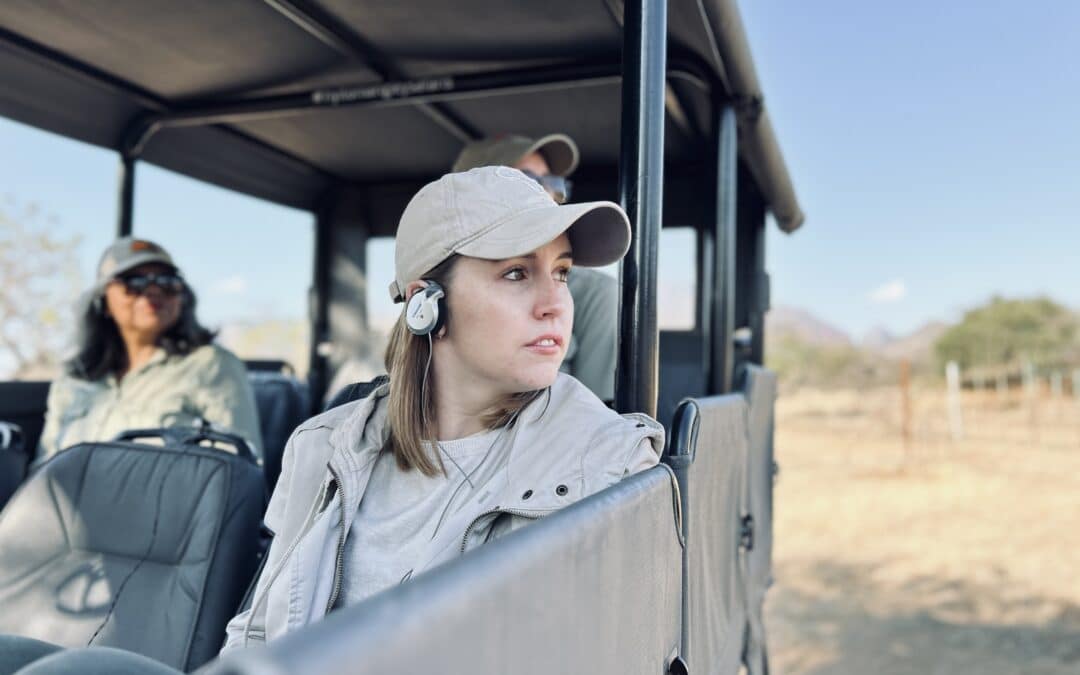
Enter the world of Sound Safaris – a unique adventure that brings our African wilderness to life by immersing you in a rich serving of soundscapes, creating a multisensory treat for the senses that will keep you coming back for more.

Led by a team of wildlife experts and sound enthusiasts, Sound Safaris are a Hoedspruit based initiative, offering an unforgettable experience that allows participants to listen to the natural world in surreal detail. 

Using specialised listening equipment, one can tune into the hidden symphony of the African bush. Whether a seasoned safari-goer or a first-time traveller from abroad, this innovative approach offers a deeply enriching way to connect with nature, providing an educationally empowering experience that titillates the senses.

Keen to find out more? Come along as we unpack the concept and introduce you to a team of passionate conservationists and wildlife enthusiasts.


GUIDED BY EXPERTS 

The Sound Safari is guided by none other than Casper Badenhorst, a vastly knowledgeable and passionate wildlife expert. Casper brings years of experience in birding and wildlife guiding to the fore on each tour, making him the perfect guide for this one-of-a-kind safari experience. Under his guidance, participants are encouraged to listen more deeply and understand the complex language of our bushveld.

Supporting Casper on the Sound Safari team are founders – Derek and Sarah Solomon, two individuals with an unparalleled love for wildlife sound and conservation. 

Derek, in particular, brings a wealth of experience and knowledge to the operation. With over 40 years’ experience in wildlife sound recording, he’s undoubtedly a pioneer in his field, with his work having taken him across Africa, lending his expertise to many a conservation effort.

As a renowned sound specialist, Derek has spent his career studying how animals communicate, especially through sounds that are often imperceptible to the human ear. His research on animal communication has not only contributed to our understanding of wildlife behaviour but also to efforts in wildlife conservation.

Last but certainly not least is Sarah, the heart and soul of the operation. Coupled with her devotion to conservation and wildlife, she brings additional depth to the safari experience, making the entire team a powerhouse of knowledge and expertise. Together, this trio tailor your senses towards unlocking the secrets of the wild.


A CLOSER LOOK AT DEREK’S LEGACY: 

With a career spanning over four decades, Derek has recorded the sounds of Africa’s most iconic species, contributing to a body of research that is crucial for wildlife conservation. His work focuses on how animals use sound to communicate over vast distances, detect predators, and establish social structures.

Having collaborated with leading wildlife researchers, conservationists, and filmmakers – His recordings have been used on various media and scientific platforms, with the aim of educating the public and establishing an awareness for our natural world.

Derek has also worked extensively with organisations focused on elephant communication, using his expertise to help monitor and understand the movements and behaviours of these incredible creatures.


THE SCIENCE OF ANIMAL SOUNDS

Sound plays a vital role in the survival of many animal species. For humans, sight often dominates how we perceive the world, but for wildlife, sound is key to communication, survival, and interaction. Animals use sound in a variety of ways—whether it’s to find a mate, locate prey, defend territory, or avoid predators.

Infrasound: Elephants use low-frequency sounds, known as infrasound, to communicate over vast distances. These sounds, which are below the range of human hearing, can travel many kilometers and are crucial for maintaining herd connections in thick bush or open savannah.

Ultrasound: On the other end of the spectrum, animals like bats and dolphins use high-frequency sounds, or ultrasound, to navigate and locate prey. These ultrasonic signals, often used in echolocation, are inaudible to humans but essential for many species’ survival.

High-Frequency Sounds: Birds are known for their vast range of vocalizations. From territorial calls to mating songs, birds use sound to communicate their presence and intentions. Birdwatchers on a Sound Safari will be thrilled to learn how to identify different species by their calls alone.

By understanding how animals use sound, you gain a deeper appreciation for the complexity and beauty of nature’s soundscape. The Sound Safari gives you the tools to not just see the bush, but to hear and interpret its hidden conversations..


A SAFARI FOR ALL THE SENSES 

The Sound Safari is a one-of-a-kind experience that is perfect for wildlife lovers, photographers, and anyone looking for a new way to engage with nature. Whether you’re a birdwatcher, a conservation enthusiast, or a family seeking an interactive and educational adventure, the Sound Safari has something for everyone.

For international visitors, this safari offers a once-in-a-lifetime opportunity to connect with Africa in a way few have experienced before. It’s an immersive adventure that goes beyond traditional game drives and opens up a new sensory world. For locals, the Sound Safari is a fresh and exciting way to rediscover the bushveld, even for those who have explored it many times before.


WHY SOUND MATTERS TO CONSERVATION 

Beyond the immediate experience of hearing the bush in a new way, sound plays a critical role in wildlife preservation. Derek’s extensive work in sound recording has contributed to numerous efforts, helping researchers monitor species, track animal movements, and better understand wildlife behaviour.

Infrasound recordings, for example, have been crucial in studying elephant herds and monitoring their interactions over long distances. Similarly, bird calls and other high-frequency sounds have been used to track changes in ecosystems and detect environmental threats.

By joining a Sound Safari, you not only get to enjoy a unique experience but also support the ongoing research and conservation efforts led by the likes of Derek himself. The insights gained from sound can lead to better wildlife management and preservation strategies, helping to protect Africa’s incredible biodiversity for generations to come..


HOW TO JOIN A SOUND SAFARI

To book your Sound Safari experience, visit sound-safaris.com or check out more about it on visithoedspruit.com for further details.

One things for sure, this isn’t your typical game drive—it’s a sensory journey that lets you tune in to the rhythm of nature, one where you don’t just get to observe, but flow in a current of soundwaves and decibels.

Whether you’re a seasoned traveller craving something fresh or just someone who’s always dreamed of experiencing the wild in a new light, this experience offers a perspective you can’t ignore.

The bush is alive, are you ready to listen?


The Panoramic Route: A Convergence of Culture, History, and Nature

The Panoramic Route: A Convergence of Culture, History, and Nature

Woven into the heart of South Africa’s Mpumalanga province, the Panoramic Route is a journey like no other.

Famed for its breathtaking landscapes, awe-inspiring viewpoints, cascading waterfalls, and deep historical significance, this iconic route has become an essential part of any visitor’s itinerary while exploring the wonder of Hoedspruit – making it one of South Africa’s most cherished road trips.

Outside the traditional safari experience, the “Pano”, as it is affectionately known by locals, provides a diverse adventure that captivates the senses. From the towering peaks of the Drakensberg to lush forests and deep river valleys, it invites travelers to immerse themselves in a realm of experiences both visually and experientially. Here, nature showcases its magnificence at every turn, while stories of the past echo through the historical sites scattered along the route.

In this blog, we’ll unpack everything you need to know about exploring the Route. From must-visit spots to hidden gems, join us we guide you through the wonders that await 


HISTORY AND CULTURE:

Origins and Development: The history of the Panoramic Route is intimately connected to the gold rush era of the late 19th century. The discovery of gold in 1873 spurred a massive influx of settlers and the establishment of mining camps, most notably Pilgrim’s Rest. Today, this area stands as a well-preserved historical site, offering deep insights into the gold rush period that significantly shaped the region.


ROUTE ITINERARY: GENERAL TIPS  

Total Distance: Approximately 160-180 kilometers (100-112 miles), depending on the specific route and detours taken.

The drive typically takes 5 to 6 hours if done in one day, but many travellers prefer to stretch it over 2 to 3 days to fully explore the sights and enjoy activities along the way.

Traditional Starting Point: Graskop – often the gateway to the Panoramic Route, it offers  access to key attractions like God’s Window and the waterfalls. It’s an ideal spot to begin your adventure with a hearty breakfast and stock up on supplies.

Ending Points: Hoedspruit or Sabie – end your journey in Hoedspruit, a gateway to the Greater Kruger National Park, for a seamless transition into a number of safari experiences or alternatively, finish in Sabie, known for its serene picturesque terrain and abundant outdoor activities.

Alternate Routes and Options…

Reverse Route: Start in Hoedspruit, exploring Blyde River Canyon first, then making your way back to Graskop. This route provides a unique perspective and often fewer crowds.

Less Commercial Route: Begin at Pilgrim’s Rest instead of Graskop. As mentioned this historical village adds a cultural aspect to your trip and can lead you into the main route from a different angle, avoiding the busier areas.

If the Weather is Bad…

Start Point: In poor weather, start your journey at Bourke’s Luck Potholes, which offers sheltered walkways and is still captivating in misty conditions. Alternatively, begin at the Graskop Gorge Lift for an indoor rainforest experience.

End Point: In bad weather, finish in Pilgrim’s Rest, where you can explore the historical buildings and museums, providing a meaningful conclusion to your trip, rain or shine.


KEY FEATURES AND GEOGRAPHY: 

Lets take a closer look at all the major attractions and focal points so that you can best plan and priorotise a suitable itinerary for you and your family:

God’s Window: Located near Graskop on the Panorama Route, God’s Window is one of the most iconic viewpoints in the area. Perched on the edge of the Drakensberg escarpment, it offers a breathtaking vista over the Lowveld, stretching as far as Kruger National Park and even Mozambique on a clear day. The viewpoint sits at an elevation of approximately 1,730 meters (5,675 feet) and is surrounded by lush rainforests, with a short walk through the forest leading to several vantage points. An interesting fact is that God’s Window gained international fame when it was featured in the 1980s movie “The Gods Must Be Crazy,” solidifying its status as a must-see natural wonder.

Pinnacle Rock: Also found near Graskop, Pinnacle Rock is a striking quartzite tower that rises 30 meters (around 98 feet) out of the dense indigenous forest below. It is one of the first stops on the Panorama Route as you travel north from Graskop. The viewpoint provides a sweeping view of the surrounding landscape, including a dramatic waterfall that cascades into a deep gorge. A lesser-known fact about Pinnacle Rock is that it is surrounded by a wide variety of flora, with wildflowers and native plant species flourishing in the rocky crevices, adding to its natural beauty.

Waterfalls: The route features several magnificent waterfalls, including Lisbon Falls, which cascades into a lush gorge, the Berlin Falls, where water plunges into a deep pool and Mac Mac Falls, a national monument offering a picnic area and viewpoints.

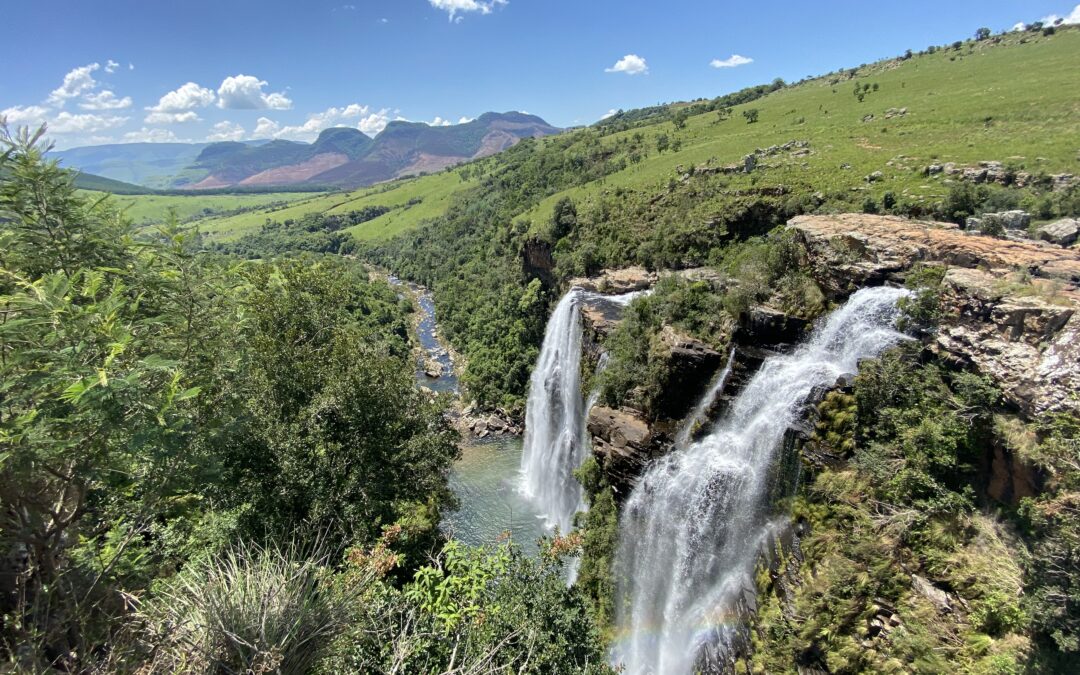
Lisbon Falls: having been associated with both the Portuguese capital and after Lisbon Creek and situated on a farm also named Lisbon, this waterfall stands as one of the highest in Mpumalanga, with water cascading 94 meters into a stunning gorge.

The falls are not only a natural wonder but also offer an ideal spot for photography and sightseeing. The well-maintained area allows visitors to immerse themselves in the beauty of the falls without disturbing the surrounding ecosystem, making it a must-visit attraction along the Panorama Route.

Berlin Falls: Sharing its name with the German capital, Berlin Falls is a mesmerizing sight, with water plunging dramatically off a cliff into a deep pool below. Surrounded by lush natural flora, this waterfall attracts nature lovers and photographers alike.

The area’s preservation efforts ensure that tourism doesn’t negatively impact the environment, making Berlin Falls a pristine and captivating stop for anyone exploring the region.

Mac Mac Falls: Historically significant and named after the Scottish miners who once worked the goldfields in the area, Mac Mac Falls features twin waterfalls plunging side by side. Declared a national monument, the falls are a popular attraction due to their unique formation and rich history.

Developed picnic areas and viewpoints enhance the visitor experience, providing ample opportunities to appreciate the falls while adhering to conservation efforts aimed at preserving the site for future generations.

Blyde River Canyon and Bourke’s Luck Potholes:

Blyde River Canyon, one of the largest green canyons in the world, is a vital conservation zone, known for its dramatic cliffs, scenic viewpoints, and rich biodiversity. Spanning 25 kilometers in length, the canyon is home to lush subtropical foliage, waterfalls, and diverse wildlife including primates, antelope, hippos, and the occasional predator. Birdwatchers will be delighted by the variety of bird species, including the rare Taita falcon and the African fish eagle.

Bourke’s Luck Potholes:

Another fascinating geological feature formed by centuries of swirling water at the confluence of the Treur and Blyde Rivers. Named after Tom Bourke, a prospector who believed the area held rich gold deposits in the late 1800s, these cylindrical potholes were created by the powerful erosive forces of water carrying pebbles and debris. Though Bourke never found his fortune in gold, the potholes became one of the most iconic natural attractions along the Panorama Route, showcasing stunning rock formations, deep pools, and intricate patterns carved into the sandstone over time.

Graskop Gorge Lift: The Graskop Gorge Lift Co. is one of the most exciting additions to Mpumalanga’s tourist attractions, offering a completely unique way to experience the natural beauty of the region. This glass elevator takes visitors 51 meters down the face of a cliff into the lush forest below, providing an immersive experience with a minimal environmental footprint. The lift allows visitors to transition from panoramic views at the top to a subtropical forest ecosystem at the base of the gorge in a matter of seconds.

Once at the bottom, visitors can explore a network of wooden walkways and suspension bridges that meander through the forest, offering the chance to discover cascading waterfalls, native plants, and wildlife in their natural habitat. Interpretive signs along the trails provide insights into the ecology and importance of this delicate forest environment, making it not only a scenic adventure but also an educational one.

For adrenaline seekers, Graskop Gorge also offers a thrilling zipline experience that spans across the gorge, providing unparalleled views of the waterfall and landscape below. There are also giant swings for those seeking a more intense rush of excitement. At the top of the lift, there’s a visitor centre with shops, restaurants, and viewpoints, offering a more relaxed way to enjoy the views for those who prefer to stay above the forest canopy.

Together, the Blyde River Canyon and Graskop Gorge Lift offer a blend of breathtaking landscapes, outdoor activities, and deep ecological significance, ensuring an unforgettable experience for every visitor.


 TRAVELLING WITH THE EXPERTS: GUIDED TOURS

For those who prefer not to travel alone or are looking for a guided experience, joining Buya Buya Travel and Tours’ Panoramic Tour is a game-changer, transforming your journey into a hassle-free, enriching adventure. While traveling alone can be a thrilling experience, it comes with its set of challenges—navigating unfamiliar roads, planning each stop, ensuring safety, and possibly missing out on hidden gems known only to locals. Buya Buya’s guided tours offer a range of benefits that make your exploration of the Panorama Route both relaxing and deeply fulfilling.

*A traditional route on Buya Buya’s itinerary 

Expert Guidance and Local Knowledge
One of the greatest benefits of traveling with Buya Buya is the wealth of knowledge their experienced guides bring to the tour. These local experts are not only familiar with the main attractions but they also share fascinating stories, cultural insights, and historical context that enrich your experience.

Comfort and Convenience
Forget the stress of renting a car, plotting routes, or worrying about fuel and road conditions. Buya Buya Travel and Tours take care of all the logistics, providing comfortable, air-conditioned transport that allows you to sit back, relax, and fully immerse yourself in the spectacular scenery.

No Missed Opportunities
Planning the perfect itinerary on your own can be daunting. Without local knowledge, it’s easy to miss out on hidden gems or mismanage your time, resulting in rushed visits to key attractions. Buya Buya’s Panoramic Tour is carefully curated to ensure you get the most out of your day. Their guides know the best times to visit each spot to avoid crowds, the secret viewpoints often overlooked, and how to maximize your experience, making sure you see all the iconic landmarks and some lesser-known treasures as well.

Safety and Peace of Mind
Traveling alone in unfamiliar areas can be daunting, especially when venturing off the beaten path. With Buya Buya, you can relax, knowing you’re in safe hands. Their guides are trained in first aid and have extensive knowledge of the area, road conditions, and weather patterns. This level of preparedness means that, in case of any unforeseen circumstances, you have a professional at your side to handle the situation.

A Personalized Experience
Buya Buya prides itself on offering personalised experiences. Their guides are approachable and eager to cater to the interests of their guests. Have a specific question about the flora or geology of the region? They’re always there to satisfy your curiosity. Want to take that extra photo at God’s Window? They’ll accommodate where possible. This level of flexibility ensures that, while you’re traveling with others, the experience still feels unique and tailored to your curiosity.

So, if you’re dreaming of exploring the breathtaking beauty of the Panorama Route without the pressure of going solo, let Buya Buya Travel and Tours be your trusted companion. 

We sincerely hope this blog has been the catalyst you’ve needed to come and explore the magic of Hoedspruit and all her surroundings have to offer. A natural springboard for action and adventure, you’re sure to get a fix, whether satisfying your craving for fun, life’s deepest questions or simply just your belly – come see for yourself , come and Visit Hoedspruit.

.


Our Silent Guardians: The Heartbreak and Hope Behind Dehorning a Rhino

Our Silent Guardians: The Heartbreak and Hope Behind Dehorning a Rhino

A day never to be forgotten…

As I found myself transfixed on the silhouette of our beloved Mariepskop, perfectly contrasted against the backdrop of thick overcast clouds, my ears were alerted, to an approaching rumble that signaled intent.

As the helicopter’s blades sliced through the crisp early morning air, the bush sprang to life with an expectant energy that was substantiated by the presence of game viewers filled with people on a mission – a mission to change the fate of some rather special characters.

Visit Hoedspruit and Buya Buya Tours (our sister company) had the unique privilege of being invited to this extraordinary conservation effort, where some of our very precious rhinos were  dehorned.

Hoedspruit is a home that I’ve come to recognize not just as a safari/tourist hub but as a bastion of conservation and little did my colleague Nick and myself realise just how impactful the day would turn out to be, as we witnessed first-hand the lengths to which our community goes to protect these majestic animals.

The operation, arranged by My Africa, was both emotional and eye-opening. As I stood alongside the dedicated team — including K9 security, whose quiet vigilance ensured the safety of the respective reserve — I realized that this was more than just an effort to save a species, it was a race against time to outsmart the relentless threat of greed and poaching.

While some may feel sorrow seeing these magnificent creatures without their horns, the truth is that this act of dehorning is probably their greatest shield. It’s a deterrent, a vital step that ensures Rhinos are no longer targeted by poachers who take their lives for the very thing that we now remove to save them.

So be before I continue a heartfelt thank you to Moditlo River Lodge for inviting us to be part of this remarkable occasion. The experience was a profound reminder that our role in conservation is not just about protecting the present — it’s about preserving a future where rhinos can live free from the shadow of extinction.

Join me as we unpack the much-debated process of dehorning

DEHORNING: THE LAST RESORT IN A CRISIS  

Rhino dehorning is a decision made with great care. It’s an invasive, labour-intensive, and costly procedure, with each operation costing between R10,000 and R15,000 per rhino. Yet, despite these challenges, dehorning has become a crucial weapon in the fight for their survival.

As I stood there, witnessing the procedure unfold, it struck me just how dire the situation truly is. The poaching crisis is fueled by an insatiable black-market demand for rhino horn, which can fetch an astounding $60,000 to $100,000 per kilogram, turning these gentle giants into prime targets. 

I had always imagined a rhino’s horn as a symbol of power and majesty, yet here it was, being removed in a matter of minutes. The goal? To make these animals less attractive to poachers. It felt counterintuitive at first—why strip these creatures of their iconic horns? But as the operation progressed, I understood that this was an act of necessity, one driven by the urgent need to protect these animals from extinction.


PLAYERS IN THE FIELD: A SYMPHONY OF COLLABORATION 

A dehorning operation is an intricate ballet involving multiple players, each with a critical role. As we gathered at our rendezvous that morning, the team was a well-coordinated unit of pilots, veterinarians, anti-poaching rangers and guests. The helicopter, piloted by a local stalwart, was the first to spring into action. It lifted off to locate the rhinos, scouring the vast terrain of the reserve from above.

Once a rhino was spotted, the veterinarian, darted it with a tranquilizer from the air. This, too, was a delicate process, as the dose had to be precisely measured to immobilize the rhino without causing undue stress or harm.

Now I’m not one for being economical with the truth but watching the giant creature slowly succumb to the sedation was both emotionally unsettling and humbling. These animals, often weighing upwards of two tonnes, are brought to their knees in mere moments—but always with the utmost care and expertise.

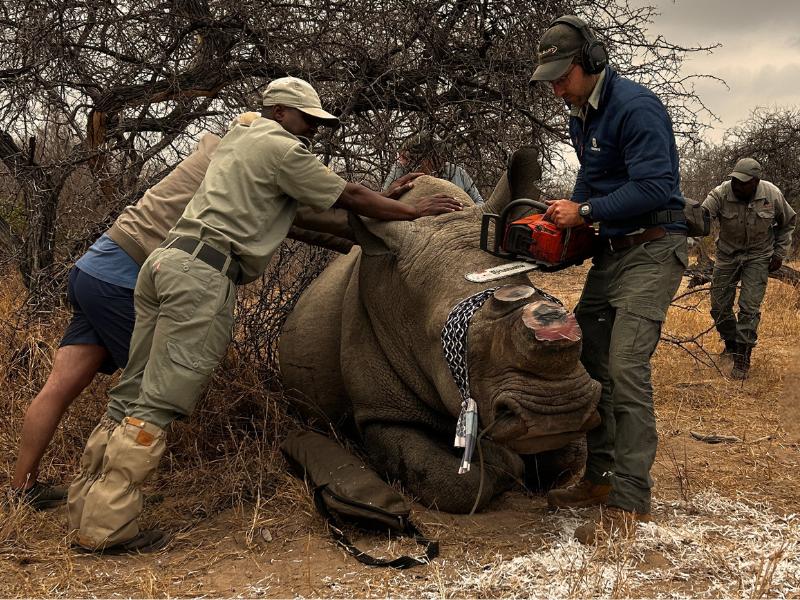
Once the rhino was safely sedated, we moved in. One team worked to cover the animal’s eyes and ears to reduce its sensory overload, while others set about the task of getting the rhino in its proper resting position so that the horn can be removed. For this, a chainsaw is used—a tool chosen not for its brutality, but for its speed and efficiency.

The entire process was over in less than 20 minutes. The stump was filed down to ensure smooth regrowth, and a special oil was applied to prevent cracking.

What struck me most during the process was the precision and care involved. Every step was calculated to minimize the rhino’s discomfort, and the veterinarians and rangers never lost sight of the fact that they were working with a living, breathing animal. It was clear that, despite the invasive nature of dehorning, the rhino’s well-being was always the top priority.


    WHY DEHORNING? A NECESSARY EVIL

    In an ideal world, rhino dehorning would be unnecessary. The horns of rhinos are integral to their identity and are used for various natural behaviours like foraging and defending territory. 

    Removing them changes the animal’s way of life, but when faced with the choice between a hornless rhino or their demise, the decision becomes stark. Poaching has decimated rhino populations across Africa, and in areas like Hoedspruit, it is a constant threat.

    Dehorning has been proven to reduce poaching rates significantly. Poachers, often operating with ruthless efficiency, tend to avoid rhinos that have already been dehorned, knowing the payoff is much smaller. In smaller reserves, where monitoring rhino populations is more feasible, dehorning has been a successful deterrent. 

    However, dehorning is not without its downsides. It is a costly endeavour, requiring repeated operations every year or two to ensure that the horn doesn’t regrow enough to become a target again​. 

    Additionally, poachers don’t always leave dehorned rhinos alone. In some tragic cases, rhinos are still killed for the small stump of horn that remains, or simply out of spite. Moreover, removing the horn doesn’t entirely negate the poaching threat—it merely shifts the risk to other rhinos​. 

    THE EMOTIONAL WEIGHT OF THE EXPERIENCE  

    As I stood by, watching this massive animal slowly wake from its anaesthesia, a wave of emotions came over me. On the one hand, I was heartened by the collective efforts of everyone involved, from the pilots in the sky to the rangers on the ground. But on the other hand, there was a sadness that lingered. I couldn’t help but feel that we, as humans, have driven the situation to this point—where the only way to protect these magnificent animals is to strip them of their identity.

    To quote a much beloved veterinarian in Hoedspruit, “A hornless rhino is better than a dead rhino”…and its these very words that jogged my awareness to the gravitas of the situation as we packed up the equipment and headed back to base.

    The rhino, though groggy, was on its feet again, and within minutes, it disappeared into the thick bush, as if nothing had happened.


    HOEDSPRUIT: A CONSERVATION HUB

    Beyond dehorning, Hoedspruit is home to a range of initiatives dedicated to the long-term preservation of its rhino populations.

    Various organizations and private reserves frequently collaborate to provide critical veterinary care, deploy anti-poaching units, and implement monitoring systems that track rhino movements and health.

    These combined efforts are further bolstered by the involvement of the local community and conservation-focused tourism. Visitors have the opportunity to engage in meaningful activities like rhino tagging and educational tours, which help raise awareness and generate funds for ongoing conservation efforts.

    Through these collaborative and multifaceted approaches, Hoedspruit undeniably plays a critical role in safeguarding the future of our rhinos. The combination of proactive conservation strategies has significantly reduced the threat posed by poachers in the region. By integrating community involvement and conservation tourism, Hoedspruit has created a sustainable model that not only protects wildlife but also educates and empowers visitors and locals alike.


     A CALL TO ACTION

    As I reflect on our experience, I realize that rhino dehorning is not just a conservation tool—it’s a statement to those who seek to destroy our heritage, we’ve drawn a line in the sand, nailed our colours to the mast, demonstrating the lengths we will go to protect a species we have endangered. The process may be gruelling, but it is also a testament to the resilience of both rhinos and the people who work tirelessly to save them. 

    For anyone planning a trip to Hoedspruit, I urge you to take the time to learn about the conservation efforts happening here. Visit the reserves, speak with the experts, and, if possible, witness a dehorning operation for yourself. 

    It’s an experience that will stay with you long after you leave, reminding you of the ongoing battle to preserve one of Africa’s most iconic animals.

    .